
Before You Renovate: The Five Decisions You Should Make First
There is something exciting about starting a renovation. You begin pinning kitchens, saving bathrooms on Instagram, and imagining what your home could become. Most people think the first step is choosing tile, paint colors, or countertops.
It isn't.
The most successful renovations begin long before a single material is selected. After years of designing homes, I've found that the projects with the smoothest process and the best outcomes all have one thing in common: the homeowners made the right decisions first.
If you're planning to renovate, here are the five decisions I encourage every client to make before the demo begins.
1. Decide How You Want to Live—Not Just How You Want It to Look
Beautiful homes are wonderful, but beautiful homes that function beautifully are even better.
Ask yourself:
Do you entertain often?
Do your kids gather in the kitchen?
Do you work from home?
Where do backpacks, shoes, and mail naturally land?
What frustrates you about your current space?
Design should solve problems, not simply create prettier ones. Your daily habits should shape the design more than the latest trends.
2. Establish Your Investment Before You Fall in Love
Pinterest doesn't come with price tags.
One of the hardest conversations happens after someone falls in love with a space that's twice their budget.
Knowing your investment range early allows your designer and contractor to guide you toward decisions that provide the greatest impact without constant disappointment.
A realistic budget isn't limiting—it's freeing.

We recently finished this gym with Corley Building Company. This couple took all the right steps and ended up loving the final product AND their budget.
3. Build the Team Before You Pick the Finishes
This is one of the biggest mistakes I see.
Many homeowners select materials before they've hired the professionals who will install them. Then they discover certain products don't fit the space, exceed the budget, or create installation challenges.
When your designer and contractor collaborate from the beginning, every decision supports the next one. Problems are solved on paper instead of during construction.
That saves both time and money.
4. Design the Entire House—Even If You're Renovating One Room
A kitchen shouldn't feel like it belongs in a different house than the living room.
Even when you're only renovating one space, think about how it connects to everything around it.
Consider:
Flooring transitions
Paint colors
Lighting
Sightlines
Architectural details
Overall style
The goal isn't to create the fanciest room in the house. It's to create a home that feels intentional from one room to the next.
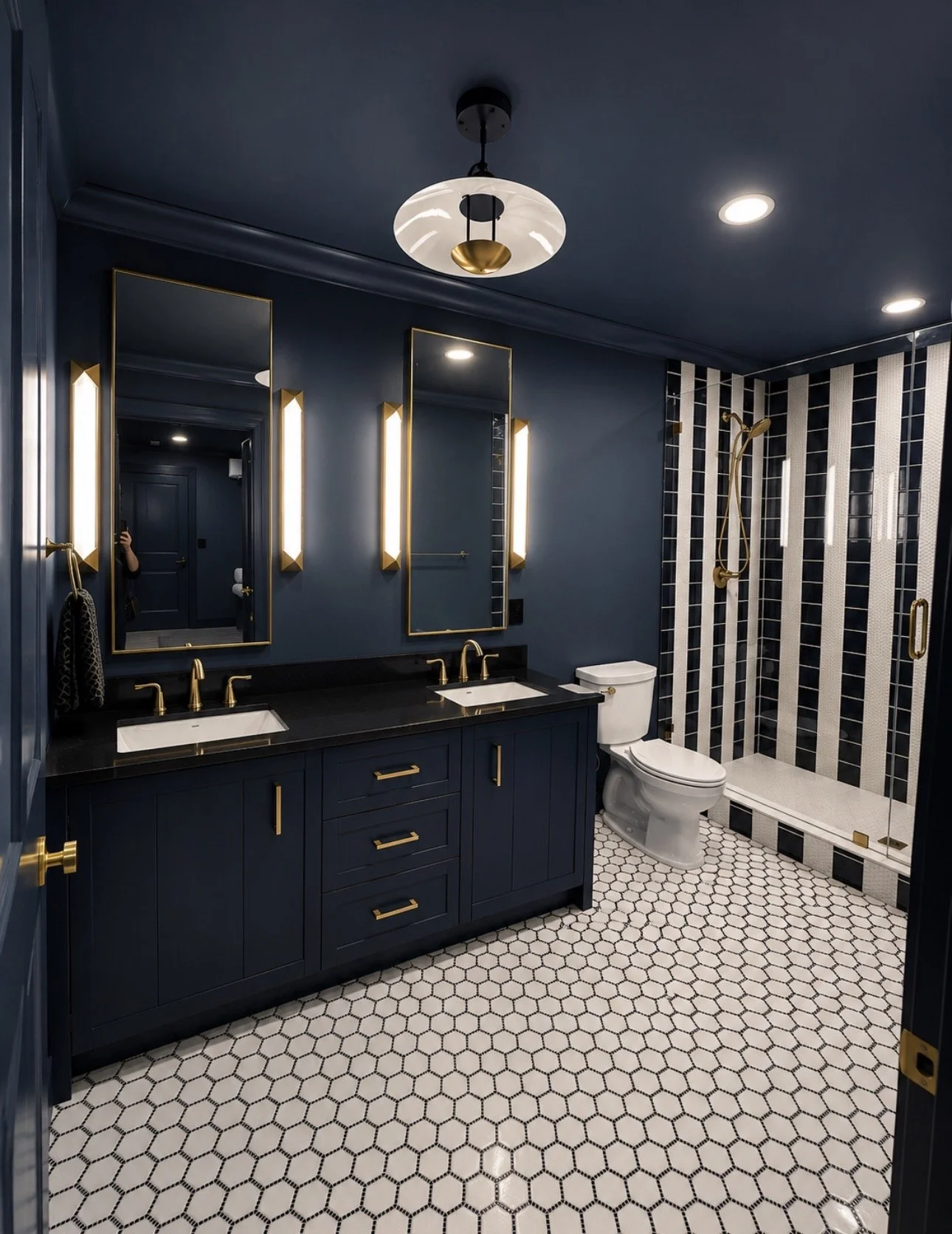
The tile choices, and everything else came after they had chosen the team, budget and how they wanted to live in their gym space.
5. Make the Big Decisions First
Countertops are exciting.
Cabinet hardware is fun.
Neither should be your first decision.
Start with the elements that are hardest to change:
Floor plan
Cabinet layout
Furniture layout
Lighting plan
Storage needs
Architectural details
Once those decisions are right, everything else becomes much easier.
Great design is built from the foundation up.
The Best Renovations Don't Happen by Accident
A successful renovation isn't about having the biggest budget or buying the most expensive finishes.
It's about making thoughtful decisions in the right order.
When you begin with a clear plan, a collaborative team, and a design that reflects the way you actually live, the process becomes less stressful—and the finished home feels timeless instead of trendy.
That's exactly what every homeowner deserves.
Love,
Lindsay