
Decorating vs. Curating: Why I Took Everything Off My Shelves and Started Over
There’s a difference between decorating a space and curating one.
And recently, I was reminded of that the hard way.
I stood in front of my built-ins—shelves I had styled, restyled, and tweaked countless times— and I hated everything on them. Not one item felt intentional. It wasn’t bad. It just wasn’t right.
It looked decorated.
Not curated.
So I did something dramatic.
I took everything off.
Every book. Every object. Every frame. Every bowl. Completely bare shelves.
And that’s when the shift happened.
Decorating Fills a Space. Curating Defines It.
Decorating is often about completion.
You add accessories so a room doesn’t feel empty. You fill shelves because shelves are there. You buy pieces that are pretty. You layer until it feels “done.”
Curating is different.
Curating is editing.
Curating is restraint.
Curating is storytelling.
When you curate, you’re not asking:
“What do I put here?”
You’re asking:
“What deserves to be here?”
That subtle difference changes everything.
Why My Shelves Felt Wrong
When I really looked at them, I realized:
I had too many small items competing for attention.
Nothing had breathing room.
There wasn’t a clear color story.
Some pieces were there just because they had always been there.
It felt styled… but not thoughtful.
It lacked hierarchy.
It lacked depth.
It lacked intention.
And intention is everything.
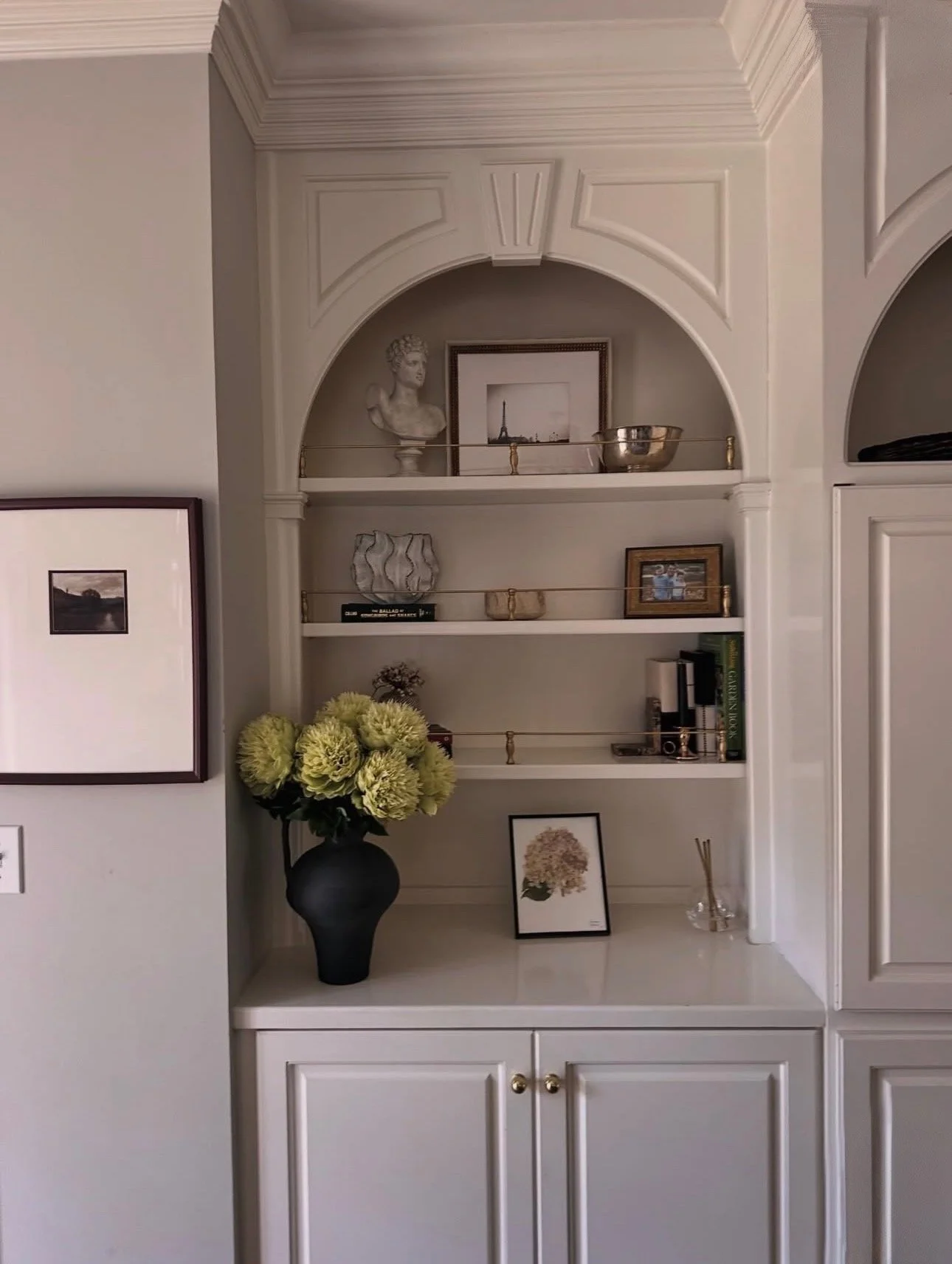
Every single time I walked by these shelves…I cringed.
Nothing was technically wrong—but nothing felt right either. It just wasn’t it.
Step One: Start with Nothing
Removing everything felt extreme—but it was freeing.
Empty shelves are quiet. They don’t lie.
When you start with nothing, you can see proportion again. You can see spacing. You can see negative space—which, honestly, is the most underrated design element.
Negative space is what makes a room feel elevated instead of cluttered.
Step Two: Choose a Direction Before Choosing Objects
This time, I didn’t start by grabbing random accessories.
I started with a vision:
A tighter color palette
Fewer objects
Larger scale pieces
More texture
More depth
More breathing room
Instead of filling each shelf, I treated each one like a composition.
Every shelf became its own mini moment.
Step Three: Create Hierarchy
A curated shelf has a visual rhythm.
Tall → medium → low.
Heavy → light.
Soft → structured.
I stacked books intentionally. I used them as risers, not just fillers. I placed one sculptural object per grouping instead of three small ones. I left certain areas intentionally blank.
Blank is not unfinished.
Blank is confident.
Step Four: Edit Ruthlessly
This is the part most people skip.
If something didn’t feel special, it came off.
If it didn’t fit the palette, it came off.
If it felt like filler, it came off.
Curating requires confidence. You have to be willing to remove good things to make space for better ones.
And sometimes that means storing half of what you own.
The Biggest Difference? Emotion.
Decorating makes a space look finished.
Curating makes a space feel intentional.
When I stepped back after restyling, it felt calm. Elevated. Personal. Thoughtful.
It felt like me—not like I had just followed styling rules.
There was space to breathe.
There was space for the eye to rest.
There was space for each object to matter.
How to Shift from Decorating to Curating in Your Own Home
If your shelves feel “off,” try this:
Take everything off.
Choose a clear color story (3–4 tones max).
Use fewer objects than you think you need.
Mix materials (wood, stone, paper, metal, fabric).
Leave negative space.
Remove anything that doesn’t feel intentional.
You’ll be shocked at the difference.
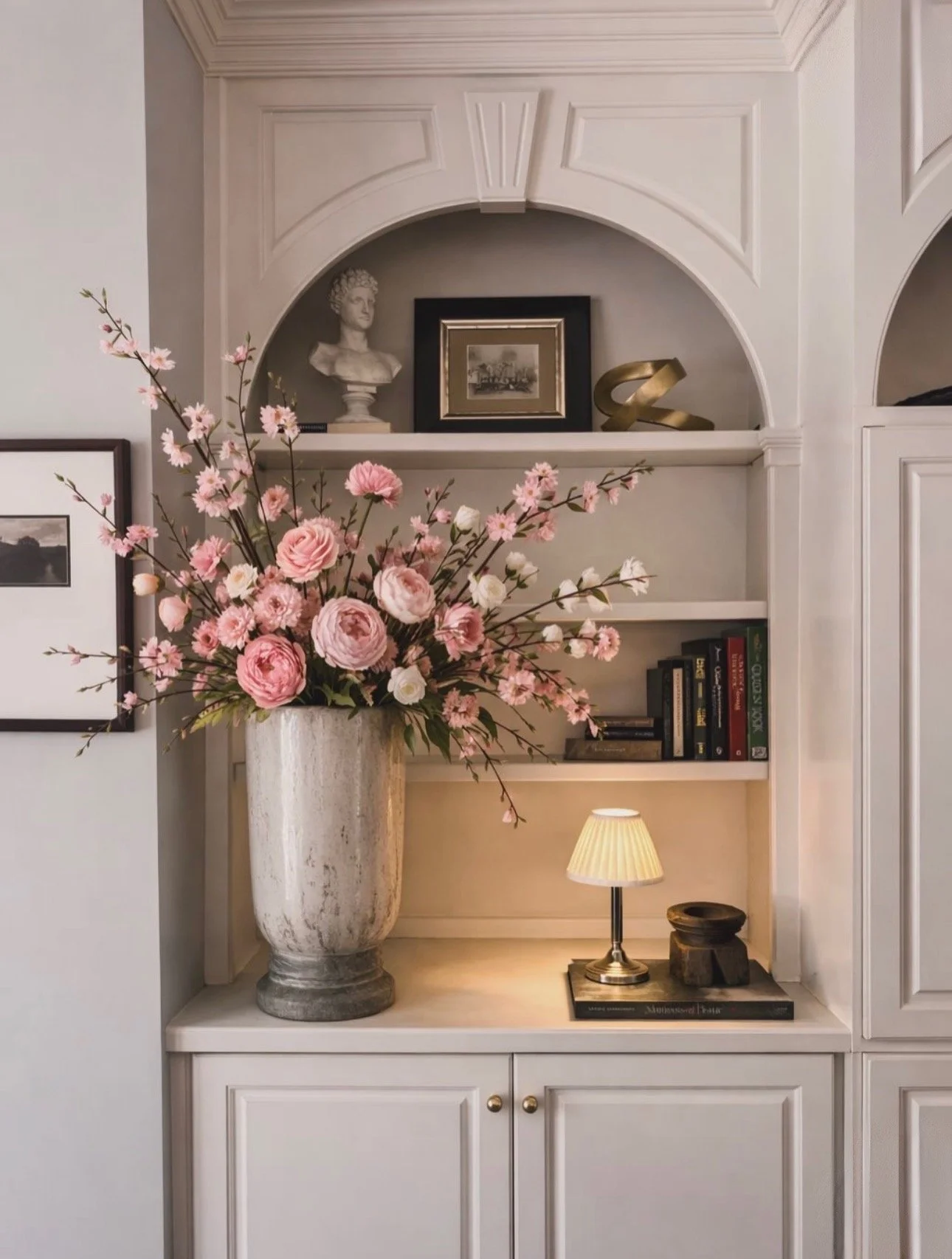
After: I finally walk by and smile.
Fewer pieces. More intention. Space to breathe.
It feels calm, layered, and actually right.
The Takeaway
A curated home isn’t about owning more beautiful things.
It’s about choosing fewer—better things.
It’s about editing.
It’s about restraint.
It’s about letting what you love actually stand out.
And sometimes, the most powerful design move you can make…
…is clearing everything off and starting over.
Love,
Lindsay