
The Power of Visual Inheritance: Designing Rooms That Feel Passed Down
Some rooms are beautiful.
Others feel remembered.
They carry something deeper than style—something quieter, harder to name. They feel as though they’ve always existed. As though generations may have gathered there before us, even if the room itself is entirely new.
This is the power of visual inheritance.
It is the art of designing spaces that feel rooted, storied, and emotionally lasting—not because they are old, but because they speak the language of permanence.
What Is Visual Inheritance?
Visual inheritance is not about copying the past.
It is about creating rooms that borrow from the emotional weight of history: spaces that feel familiar, grounded, and deeply connected to memory.
These are the rooms that often stop people in their tracks—not because they are trendy, but because they feel like they matter.
A carved chair silhouette that recalls a grandmother’s dining room. A brass fixture with the softness of age. Millwork that feels architectural rather than temporary. Pattern, patina, and proportion working together to create a sense of belonging.
These details communicate something powerful: This room was designed to stay.
Why It Matters More Than Trend
Trends are often built for immediacy. Visual inheritance is built for longevity.
In a design culture that constantly pushes what’s next, many homes risk feeling current but disconnected—beautiful for the moment, yet strangely forgettable. Rooms rooted in visual inheritance resist this because they prioritize emotional resonance over novelty.
They ask different questions:
Will this still feel meaningful years from now?
Does this room tell a story?
Does it feel collected…or simply purchased?
When a room feels passed down, it often creates a stronger emotional response because it suggests continuity.
The Design Language of Permanence
Rooms with visual inheritance often share certain characteristics:
Familiar silhouettes
Traditional forms, sculptural antiques, or heirloom-inspired furniture shapes often feel timeless because our eyes recognize them.
Material depth
Natural wood, aged brass, linen, stone, and layered textiles often age more gracefully than trend-driven finishes.
Architectural presence
Millwork, paneling, trim, and thoughtful proportion create the feeling that a room belongs to the home itself—not just to the current season.
Collected restraint
Visual inheritance is rarely loud. It tends to feel edited, thoughtful, and secure enough not to chase attention.
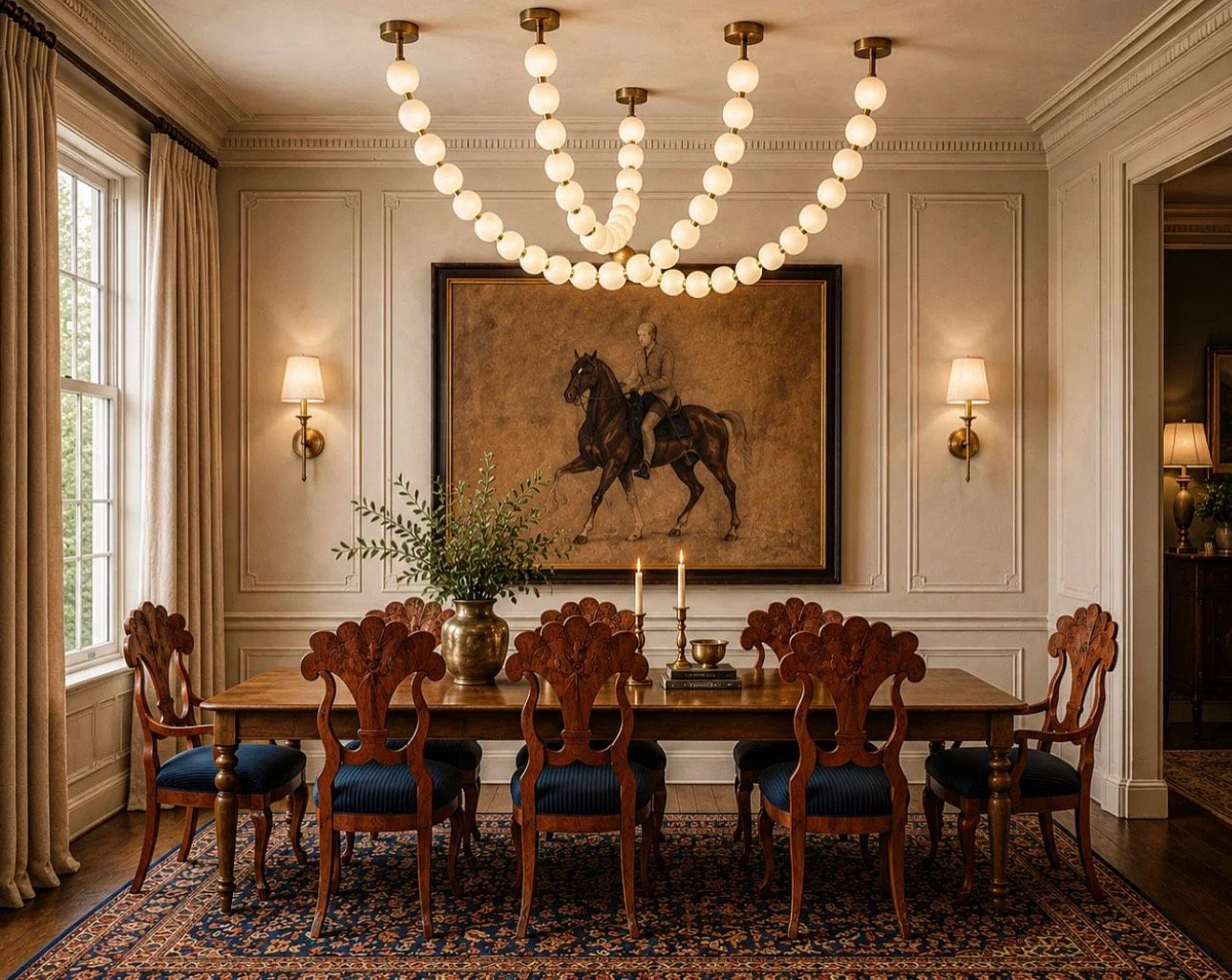
This space is an example of visual inheritance—blending modern and old in a way that feels collected, timeless, and unforgettable.
Designing Legacy Without Feeling Stuck
One of the biggest misconceptions is that designing for inheritance means designing “old.”
It doesn’t.
In fact, some of the most compelling interiors blend inherited visual language with fresh perspective:
Traditional chairs beneath modern lighting
Heirloom art paired with tailored drapery
Historic references softened by fresh palettes
This is where design becomes most powerful—when it honors memory without becoming costume.
The goal is not replication. It’s resonance.
Why These Rooms Stay With Us
The spaces we remember most are rarely the ones that followed every design rule perfectly.
They are the ones that felt layered enough to hold life: Holiday dinners. Everyday breakfasts. Late conversations. Passing seasons.
Visual inheritance creates the backdrop for those moments by designing rooms that feel emotionally prepared to hold them.
These spaces often become part of family identity—not because they are extravagant, but because they feel enduring.
Final Thoughts
A home does not have to be centuries old to feel timeless.
Sometimes, the most powerful interiors are the ones designed with enough depth, warmth, and intention to feel as though they’ve always belonged.
Visual inheritance is about more than beauty—it is about creating rooms that feel worthy of memory—spaces that do not simply impress for a moment, but quietly suggest they may be loved for generations.
Love,
Lindsay