
2026 Interior Design Trends: Depth, Heritage, and Design with a Backbone
If the last few years were about softness, neutrality, and recovery, 2026 is about conviction.
Not louder.
Not trendier.
But more intentional.
Design is moving away from disposable aesthetics and toward spaces that feel grounded, storied, and deeply considered. The homes that will feel most relevant in 2026 aren’t chasing trends at all. They’re borrowing from history, elevating craftsmanship, and embracing color, form, and architecture with restraint.
These are the design movements shaping 2026—not the recycled ideas already saturating social media.
⸻
European Heritage, Not “European-Inspired”
This isn’t about café chairs, faux plaster, or copying a look.
In 2026, European heritage design is about proportion, patina, and permanence.
Spaces feel inherited rather than installed. Materials are chosen for how they age, not how they photograph. There’s a quiet discipline to these interiors—nothing is shouting, and nothing feels rushed.
We’re seeing a return to:
• Limestone, unlacquered brass, and aged woods
• Classical proportions and thoughtful symmetry
• Paneling, cornices, and architectural restraint
• Furniture that feels grounded—lower, heavier, quieter
This movement favors longevity over novelty and depth over decoration.
⸻
Art Deco, Reimagined and Softened
Art Deco is reemerging—but not in its Gatsby-era costume.
2026’s version of Art Deco is refined, organic, and grown up.
The geometry remains, but it’s softened.
The glamour remains, but it’s muted.
The luxury is present, but it whispers.
You’ll see:
• Fluted and ribbed surfaces with depth rather than shine
• Soft arches replacing sharp zigzags
• Symmetry woven into cabinetry, mirrors, lighting, and millwork
Instead of themed rooms, Deco elements are layered subtly—paired with natural materials and calm palettes so the result feels timeless rather than theatrical.
⸻
Jewel Tones with Patina, Not Saturation
Color is back—but it’s earned.
The jewel tones of 2026 are not glossy or loud. They’re complex, oxidized, and grounded.
Think:
• Inky sapphire
• Deep emerald with brown undertones
• Garnet, aubergine, and smoky teal
These colors are most powerful when used architecturally:
• Trim, ceilings, cabinetry, and built-ins
• Wrapped rooms rather than accent walls
• Paired with stone, brass, plaster, and wood
The goal isn’t drama. It’s depth.
⸻
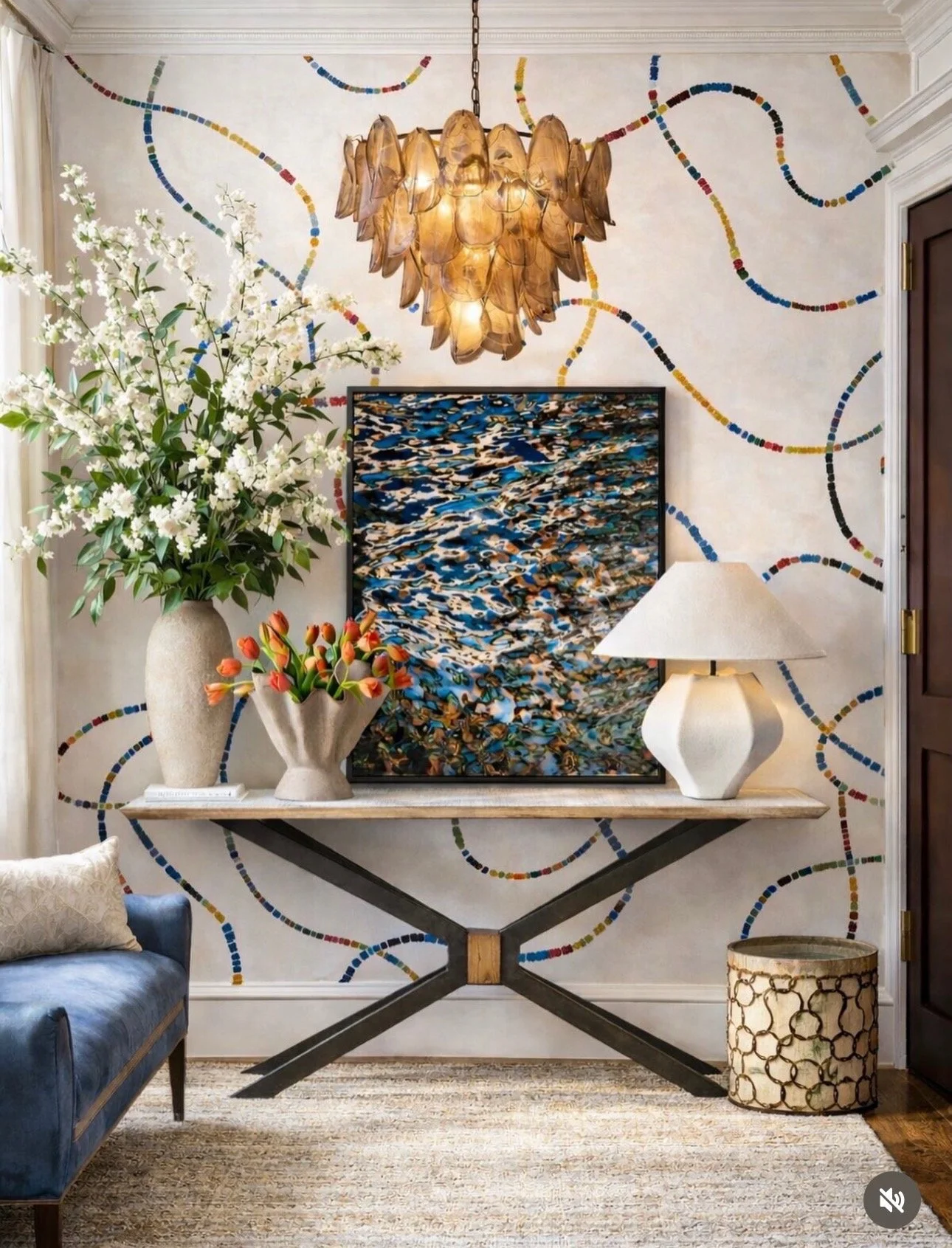
Pattern as Atmosphere, Not Statement
Pattern no longer exists to be the “moment.”
In 2026, pattern becomes atmospheric.
Instead of feature walls or trendy prints, we’re seeing:
• Tonal, large-scale patterns
• Wallpapers that read as texture from across the room
• Motifs inspired by nature, heritage, and abstraction
Pattern becomes part of the architecture—something you feel before you consciously notice it.
⸻
Collected Interiors, Not Styled Ones
Homes are moving away from over-styled shelves and toward personal, imperfect layers.
In 2026, the most compelling spaces feel human.
We’re seeing:
• Art that isn’t perfectly centered
• Objects with wear, age, and story
• Fewer accessories, chosen with intention
Vintage ceramics, handwoven textiles, and artwork chosen for emotional resonance—not scale charts—create rooms that feel lived in rather than staged.
⸻
Architectural Pieces as the New Art
One of the most important shifts in 2026: architecture becomes the focal point.
Rather than filling rooms with decorative objects, homes are anchored by architectural moments—pieces that feel permanent, sculptural, and grounded.
Think:
• Plaster range hoods and fireplaces with softened edges
• Fluted or paneled millwork that feels furniture-like
• Arched niches, recessed shelving, and built-in benches
• Statement stone elements that function as art
These aren’t embellishments. They’re anchors.
A beautifully proportioned arch or a custom cabinet with architectural detailing does more than a dozen styled accessories ever could. Homes feel designed—not decorated.
⸻
Quiet Luxury Evolves into Quiet Confidence
Perhaps the biggest shift of all: homes are no longer designed to impress strangers.
In 2026, design centers around:
• Longevity
• Daily rituals
• Emotional grounding
Luxury shows up through comfort that doesn’t apologize, materials that improve with time, and spaces that feel calm, assured, and deeply personal.
This isn’t minimalism.
It isn’t maximalism.
It’s confidence.
⸻
Looking Ahead
The future of interiors isn’t about trends—it’s about discernment.
2026 favors homes that feel rooted, architectural, and layered with meaning. Spaces that don’t ask for attention—but reward it.
Design is slowing down.
And in that slowness, it’s becoming far more powerful.
Love,
Lindsay