
Designing for the Life You’re Afraid to Admit You Want
There is a moment that happens in almost every design conversation—usually unspoken, often fleeting—where someone hesitates before telling the truth.
They soften their voice.
They qualify their words.
They laugh it off.
“I know this might sound silly…”
“I don’t need this, but…”
“This isn’t practical, but I love it.”
What they’re really saying is: I want a life that feels fuller than the one I’ve been allowing myself to imagine.
And somewhere along the way, many of us learned to be cautious with our wanting.
We learned that ambition should be quiet.
That beauty should be justified.
That comfort should be earned.
That joy should be reasonable.
So we design homes that make sense—but don’t always make us feel alive.
⸻
The Difference Between “Enough” and “Fulfilled”
There is nothing wrong with a home that functions, But function alone is not the same as fulfillment.
A kitchen can cook meals and still feel cold.
A living room can seat guests and still feel unused.
A bedroom can hold a bed and still never feel like rest.
Often, our homes reflect the life we think we should be living—efficient, responsible, acceptable—rather than the life we quietly crave.
The slower mornings.
The deeper exhale.
The version of ourselves that lingers instead of rushes.
Design becomes a mirror. And sometimes, we avoid looking too closely.
⸻
Why We Apologize for Wanting Beauty
So many people feel the need to explain their desires before they allow them, hence the uncomfortable laugh before someone tells us what they really want their home to feel like.
As if beauty must be defended.
As if wanting more warmth, depth, softness, or richness is somehow indulgent.
As if choosing intention over efficiency needs permission.
But beauty is not frivolous.
Beauty shapes how we move through our days.
It affects how long we stay at the table.
It changes whether we gather or retreat.
It quietly influences how present we are with the people we love.
Design is not about excess—it’s about alignment.
⸻
The Home as Permission
When a home is designed with honesty, something shifts.
People stop hovering.
They stop apologizing.
They settle in.
The right lighting invites evening conversations.
A thoughtful layout encourages connection.
Texture softens sharp days.
Layers tell the truth about who lives there.
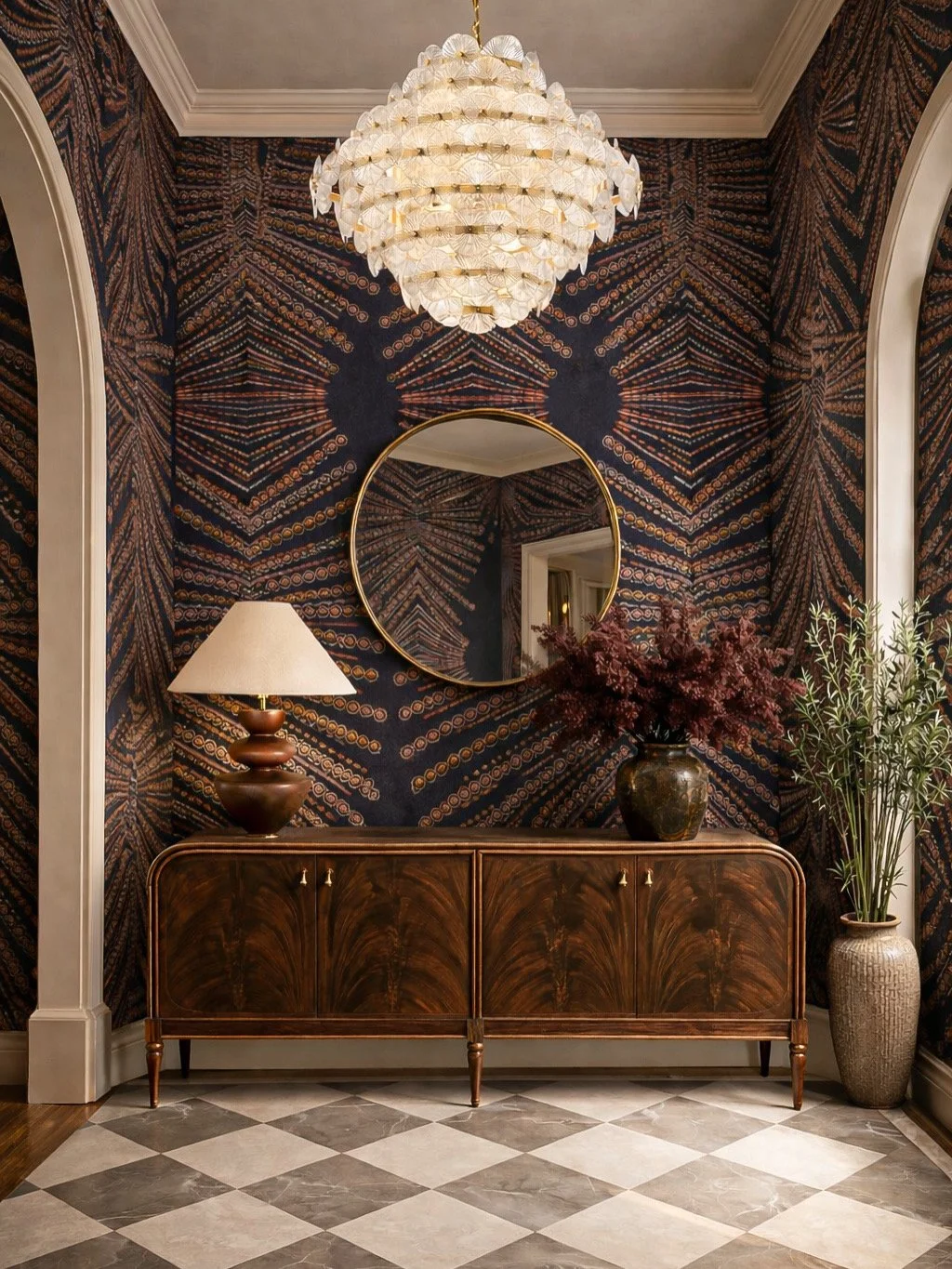
A well-designed home gives permission—not just to rest, but to be.
To live slower.
To host without performing.
To choose beauty without explaining why.
⸻
Designing for Who You’re Becoming
The most meaningful homes are not built around square footage or trends.
They’re built around values.
What matters to you now—not ten years ago.
How you actually live—not how you post.
Who you are becoming—not who you’ve outgrown.
Designing for the life you want often requires courage.
It asks you to stop minimizing your desires.
To stop designing for approval.
To stop waiting for “someday.”
Because someday has a way of staying theoretical.
⸻
You’re Allowed to Want More
Not more things.
More intention.
More ease.
More beauty that feels like home—not a showroom.
You don’t need to justify the life you want to live inside your own walls.
Your home is allowed to reflect your longing, your growth, your joy.
And perhaps the bravest design decision of all is this:
To admit what you want—and build around it.
Love,
Lindsay