
Sometimes You Need to See What You Don’t Want to Understand What You Do Want
Design is often misunderstood as a process of instant clarity. A beautiful concept board is presented, the client nods, and everything moves forward seamlessly. In reality, great design rarely works that way—and honestly, it shouldn’t.
One of the most important (and least talked about) truths in interior design is this:
sometimes clients need to see what they don’t want in order to understand what they do want.
And that’s not a problem. That’s part of the process.
Design Is Visual—Not Theoretical
Most homeowners don’t live their lives in paint swatches, floor plans, or fabric memos. They live in feeling. Comfort. Mood. Light. Function.
When a client says, “I don’t know what I want, but I’ll know it when I see it,” they’re not being difficult—they’re being honest.
Concept boards give form to abstract ideas. They turn vague words like warm, timeless, or elevated into something tangible. And sometimes, seeing those ideas fully realized is exactly what helps a client say, “Okay—this isn’t it… but now I know what is.”
That clarity doesn’t come from guessing. It comes from seeing.
Feedback Is Not Rejection
There’s a common fear—especially among newer designers—that client feedback means something went wrong. That the board “missed.” That the vision failed.
In reality, feedback usually means the opposite.
It means the client is engaged.
It means they trust the process enough to react honestly.
It means they’re refining—not rejecting.
Often, a client can’t articulate what feels off until they’re looking at it. A room might be beautiful, cohesive, and well-designed—and still not feel like them. Seeing that distinction is powerful. It allows us to pivot with intention instead of guessing in the dark.
The Value of the First Pass
The first concept board isn’t about perfection. It’s about direction.
It establishes:
• scale and proportion
• overall mood
• level of contrast or calm
• how bold or quiet a space wants to be
From there, adjustments become strategic instead of emotional. “Let’s soften this,” or “I think I want more depth,” or “Now I realize I don’t want modern—I want classic.”
That’s not backtracking. That’s progress.
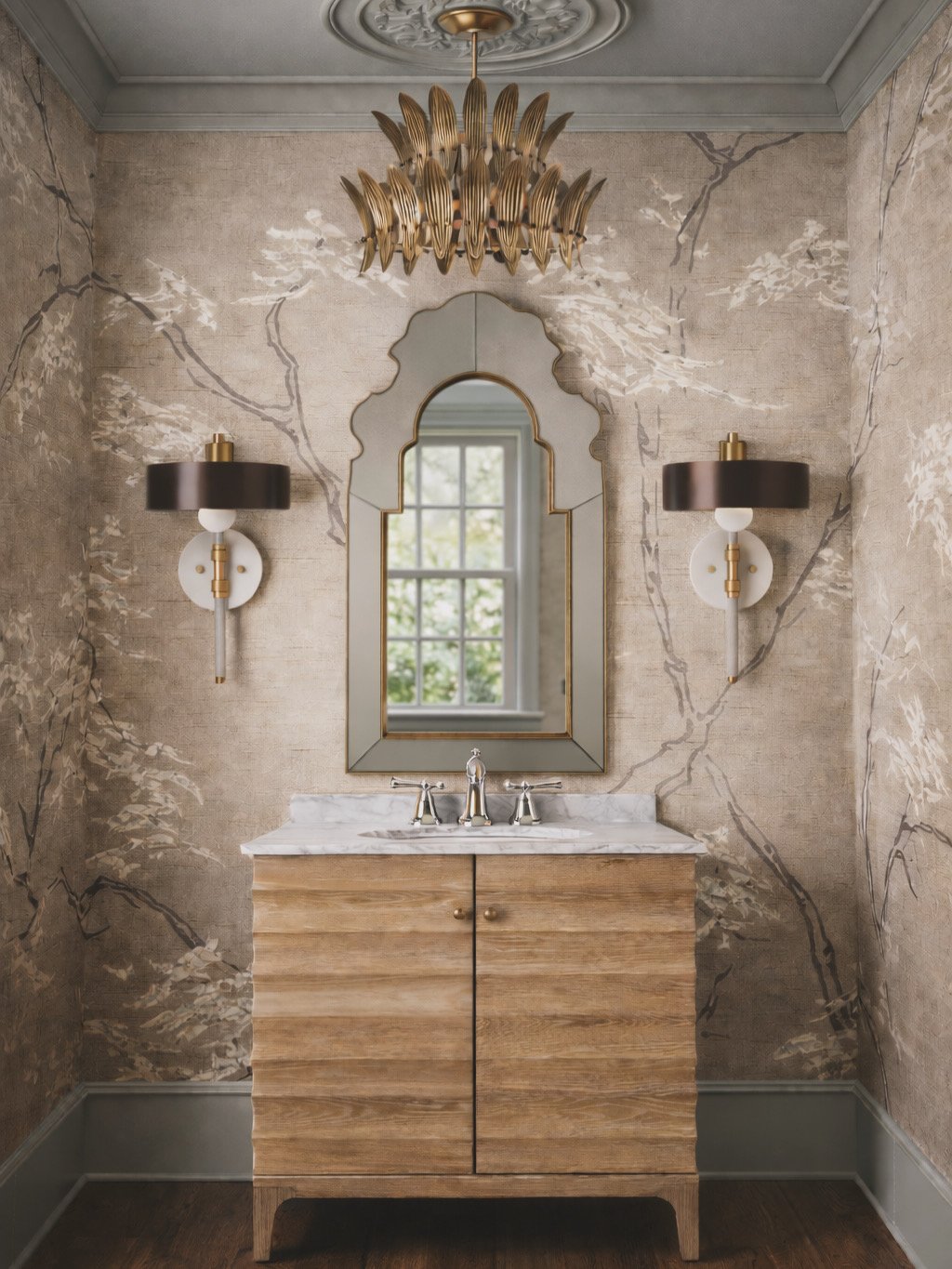
We did not hit this one on the first pass. It took time to develop the client’s love of this space, and that’s what we always aim for-love of their space. The greatest gift you can give yourself when it comes to good design is the gift of time.
Why This Makes the Final Design Better
When clients are allowed to react—to explore what resonates and what doesn’t—the final space feels deeply personal. Not trendy. Not forced. Not copied from somewhere else.
It feels right.
The most successful projects are rarely the ones with zero revisions. They’re the ones where the process was thoughtful, collaborative, and honest.
Design isn’t about getting it “right” immediately.
It’s about guiding someone to clarity—sometimes through contrast.
Trust the Process
If you’re in the middle of a design project and feeling unsure because you’ve asked for changes—or given feedback—know this: you’re not behind. You’re not difficult. You’re not doing it wrong.
You’re simply learning what you love.
And if you’re a designer reading this: your role isn’t to mind-read. It’s to lead, interpret, and refine. Sometimes the most valuable thing you can give a client is the space to say, “This isn’t it… but now I see what is.”
That’s where truly meaningful design begins.
Love,
Lindsay