
The Secret Life of “Almost Beautiful” Spaces: Why the Rooms That Almost Work Teach Us the Most
Most design blogs obsess over the finished room—the Pinterest-perfect snapshot with perfect symmetry, perfect lighting, perfect everything. But no one really talks about the spaces that are almost beautiful. The ones that are 90% there… but something feels off. And surprisingly, those rooms are the most valuable teachers we have.
I call them “Threshold Rooms.” Spaces on the threshold between what we have and what we meant to create. And if you learn to read them, they’ll tell you exactly what your home needs.
✨ Why “Almost Beautiful” Rooms Deserve More Attention
Because design doesn’t fail loudly.
It fails quietly.
A rug that's just slightly too small.
A lamp that’s the right style but the wrong height.
Curtains that almost reach the floor but float awkwardly instead.
A sofa that looks great online but feels wrong with your lighting.
Most people blame themselves:
“I must not have good taste.”
“I can’t decorate.”
“I don’t know what I’m doing.”
But really, your room is speaking. You just haven’t learned its language yet.
✨ Threshold Rooms Reveal Your Personal Style More Than Perfect Ones
A finished, polished room often reflects someone else’s influence—a designer’s portfolio, a trend cycle, or even a single viral photo you saw and imitated.
But the rooms you struggle with?
Those come from you.
You chose the sofa.
You picked the rug.
You fell in love with that weird ceramic bowl at 10pm online.
Your “almost beautiful” room is where your natural taste tries to emerge before it has the right tools.
This is where your true style starts talking.
✨ The Three Types of Threshold Rooms (and What They’re Trying to Tell You)
1. The “Everything I Love, But It Doesn’t Go Together” Room
This room means you actually have great taste—you just haven’t learned harmony yet.
You’re attracted to beautiful things, not cohesive ones.
This room is asking for: editing, not replacing.
2. The “Perfect Ingredients, Wrong Ratios” Room
The furniture is good.
The colors are good.
The materials are good.
But the proportions are chaos.
This room is asking for: adjusting scale, not changing style.
3. The “I Don’t Know What’s Wrong” Room
This one usually comes down to sensory conflict:
cold lighting with warm textiles, glossy finishes with matte ones, heavy furniture with delicate décor.
This room is asking for: balancing opposites, not adding more stuff.
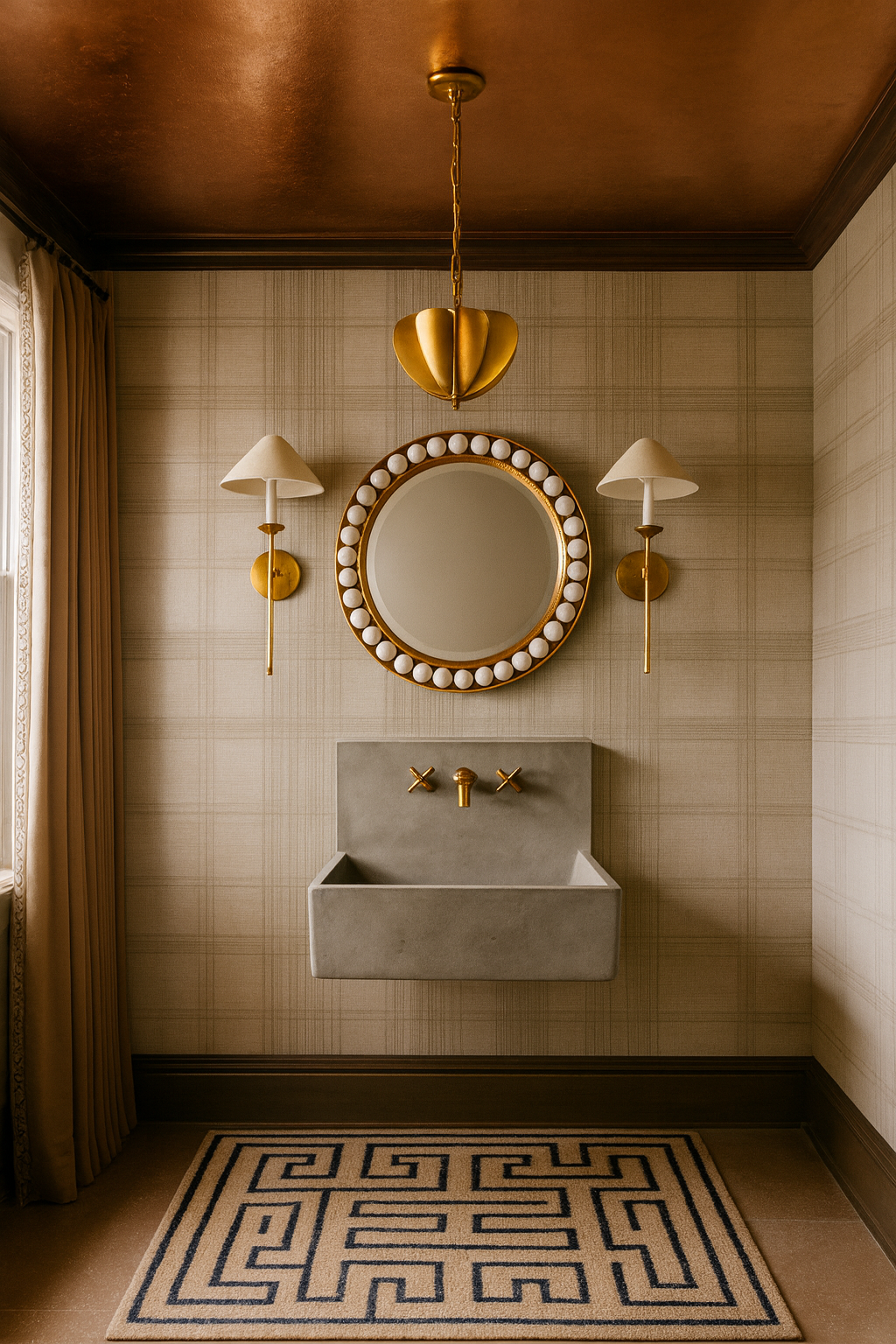
This was a Threshold Room that almost drove me to madness. It took several wildly different turns before it finally came together.
✨ Why You Should Fall in Love With Your Not-Quite-Right Room
Because it’s a snapshot of your evolving taste.
It’s a record of what your eyes enjoy, what your hands reach for, what your mind imagines—even if it hasn’t fully landed yet.
Your threshold room is not a failure.
It is a prototype.
Professional designers have these too. They just don’t post them.
✨ The Real Magic: When You Fix What You Can’t Name
There’s a moment—a very specific and emotional one—when a Threshold Room becomes a Real Room.
It happens when you solve the one problem your brain has been trying to solve subconsciously:
The lamp is finally the right height.
The wall color finally supports the furniture instead of fighting it.
The art finally fills the space instead of clinging to a lonely nail.
And suddenly, almost instantly, the room exhales.
And so do you.
✨ Final Thought
Perfect rooms impress people. Almost-perfect rooms teach people.
Your imperfect room is not the end—it’s the path.
And when you learn to listen to what it’s telling you, you’ll create spaces that feel deeply, distinctly, beautifully like you.
Love,
Lindsay